
Quick answer: Cognitive function includes attention, memory, learning, reasoning, and mental flexibility. You can support it with reliable basics: enough sleep, regular movement, balanced nutrition, stress reduction, fewer distractions, active learning, and medical support when symptoms are sudden, severe, or interfering with daily life.
Answer snapshot
- Best first move: Start with the foundations that influence mental clarity most: sleep, movement, stress load, attention hygiene, nutrition, and medical checkups when needed.
- Success signal: You notice fewer avoidable focus crashes because your daily inputs are steadier and easier to repeat.
- Avoid: Do not treat brain health content as a substitute for medical evaluation when symptoms are persistent, severe, or new.
Cognitive function implementation upgrade
Because this is health-adjacent, the article should stay cautious and practical. Keep the promise focused on supporting focus, memory, and clarity through sleep, movement, stress reduction, attention design, and learning habits rather than medical claims.

Who this is for / not for
This is for you if:
- You want practical ways to support focus, memory, and clear thinking.
- You want cautious, practical guidance without miracle claims.
- You are building routines for work, study, or healthy aging.
- You want to know when cognitive symptoms deserve professional help.
This is not for you if:
- You have sudden confusion, severe memory changes, head injury, neurological symptoms, or medical emergencies.
- You want a diagnosis or treatment plan from an article.
- You are looking for unsupported supplement promises.
Clear definition
Cognitive function is the set of mental abilities that help you pay attention, remember information, learn, solve problems, make decisions, and adapt when conditions change.
Everyday cognitive performance depends on the brain and the body. Sleep, movement, stress, nutrition, medication effects, health conditions, and environment can all influence how clearly you think.
Cognitive support decision table
Start with the most likely bottleneck instead of chasing advanced tactics.
| Symptom pattern | Possible everyday contributor | First practical step |
|---|---|---|
| Foggy mornings | Short sleep, irregular wake time, dehydration, or heavy late meals. | Stabilize wake time, get light, hydrate, and delay demanding work until alert. |
| Poor focus | Notifications, context switching, unclear tasks, fatigue. | Use one task, one tab set, one timer, and a visible next action. |
| Weak recall | Passive rereading, no testing, no spacing. | Use active recall and spaced review. |
| Mental fatigue | Too many decisions, long blocks without breaks, stress. | Batch decisions and alternate focus with recovery. |
| Sudden or severe change | Possible medical issue or medication effect. | Contact a qualified health professional promptly. |

The BRAIN Basics Framework
Use BRAIN to cover the core levers without overcomplicating brain health.
| Framework part | What it means | How to apply it |
|---|---|---|
| Body | Support the physical base. | Prioritize sleep, movement, hydration, and balanced meals. |
| Reduce noise | Protect attention. | Remove avoidable distractions and context switches. |
| Active learning | Train memory through retrieval. | Test yourself instead of only rereading. |
| Intentional recovery | Lower cognitive load. | Use breaks, stress tools, and boundaries. |
| Notice changes | Know when to get help. | Track persistent, sudden, or worsening symptoms and consult a clinician. |
Step-by-step practical method
- Check sleep first.
Before adding tools, review sleep duration, timing, consistency, and nighttime disruptions. - Add movement you can repeat.
Use walks, light exercise, or short movement breaks to support general brain and body health. - Build a focus environment.
Turn off nonessential notifications, close unused tabs, and define the next action. - Use active recall.
When learning, test what you can retrieve before reviewing notes. - Reduce cognitive load.
Keep checklists for repeated tasks and batch small decisions. - Eat for steady energy.
Favor balanced meals, fiber-rich carbohydrates, protein, healthy fats, and hydration. - Track patterns.
Notice whether fog appears after poor sleep, stress, skipped meals, or long screen sessions. - Get medical advice when appropriate.
Seek help for sudden, severe, worsening, or function-limiting cognitive changes.
Examples by situation
Student
Use active recall after each study block and review difficult material before sleep rather than rereading everything passively.
Knowledge worker
Schedule demanding thinking in your best energy window and save email/admin for lower-energy periods.
Older adult
Prioritize safe physical activity, social connection, sleep, and medical review for new or worsening symptoms.
Burned-out professional
Reduce workload and recover before expecting advanced focus methods to work.
Remote worker
Use a daily focus setup: one task, one document, one timer, one break plan.

Implementation toolkit: support cognitive function with the fundamentals first
Cognitive function is influenced by many basics that compound: sleep, stress, movement, hydration, nutrition, learning, attention habits, and medical factors. The practical goal is not to chase a perfect brain routine. It is to remove the most obvious friction from focus, memory, and mental clarity.
| Signal | Possible cause to check | First practical adjustment |
|---|---|---|
| Afternoon brain fog | Poor sleep, skipped meals, dehydration, long screen blocks. | Stabilize lunch, water, light movement, and a 5-minute reset. |
| Forgetfulness | Too many open loops or no capture system. | Use one notes inbox and one daily review checkpoint. |
| Poor focus | Interruptions, multitasking, vague tasks. | Define one next action and remove one distraction source. |
| Mental fatigue | Too much high-cognitive-load work without recovery. | Alternate deep work, admin work, and recovery breaks. |
| Persistent changes | Health, medication, mood, sleep disorder, or other medical factors. | Speak with a qualified clinician instead of self-diagnosing. |
The 10-minute clarity reset
- Drink water and step away from the screen.
- Write down every open loop on your mind.
- Choose the single next action that would make the next 30 minutes useful.
- Set a timer for 20–30 minutes.
- Remove one distraction: phone, inbox, extra tabs, or background noise.
- After the timer, write one sentence: what changed?
Daily baseline
Protect sleep timing, morning light, movement, hydration, protein/fiber at meals, and one distraction-light work block.
Weekly baseline
Review workload, stress, exercise, social connection, and whether your environment makes focus easier or harder.
Practical field guide: support cognitive function safely
Use this as a conservative checklist. The goal is not to chase perfect brain performance. The goal is to reduce avoidable friction on attention, memory, and clarity.
Daily inputs
Sleep window, movement, hydration, balanced meals, daylight, and fewer late-night screens.
Work inputs
Single-task blocks, written next actions, breaks, and fewer avoidable notifications.
Safety inputs
Track persistent changes in memory, mood, sleep, headaches, or attention and seek qualified care when symptoms are new or severe.
My clearest hours are ____. My biggest clarity drain is ____. The foundation I will improve first is ____. The symptom I should not ignore is ____.Helpful YouTube video
Wendy Suzuki’s TED talk is a helpful companion because it explains why movement is one of the most practical brain-support habits.
Helpful tools for attention, planning, and cognitive load management
Disclosure: As an Amazon Associate I earn from qualifying purchases. This section uses your Amazon Associates tracking ID papalex-20.
This is not a medical product section. These optional tools help with attention structure, task capture, time visibility, and reduced cognitive clutter.
Amazon product images and affiliate links
These product cards use direct Amazon affiliate links with tracking ID papalex-20 and visible Amazon-hosted product images pulled from the matching Amazon product page for each ASIN. No prices, star ratings, or availability claims are hard-coded because those change.

Time Timer MOD Home Edition 60 Minute Visual Timer
Useful for visible 25–60 minute focus blocks, stretch challenges, planning sessions, or distraction-free work.
Verified ASIN: B0DM3CY7L6

Moleskine Classic Notebook, Large Ruled Hard Cover
Useful for reflection, weekly review notes, habit tracking, meeting notes, or planning one next action.
Verified ASIN: 8883701127
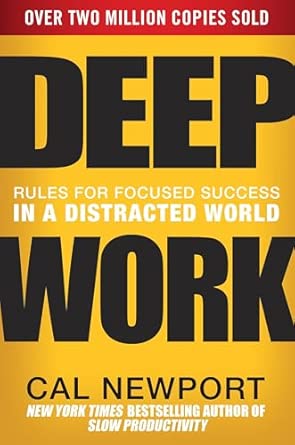
Deep Work by Cal Newport
Useful for understanding attention, distraction, and the value of protecting deep work blocks.
Verified ASIN: 1455586692

Getting Things Done by David Allen
Useful for building a trusted capture-and-review system for tasks, projects, and commitments.
Verified ASIN: 0143126563
How to use these product recommendations responsibly
- Use the timer for attention blocks, the notebook for brain dumps, Deep Work for distraction control, and Getting Things Done for reducing open-loop cognitive load.
- Do not buy anything unless it solves a real workflow problem from the article.
- Each card links to the exact ASIN shown in the card with affiliate tag
papalex-20.
Amazon product pages, images, prices, editions, sellers, and availability can change. This code is designed to render product images through Amazon rather than copying or rehosting them.
Common mistakes and troubleshooting
Treating supplements as the foundation
Sleep, movement, nutrition, stress, and medical safety come before pills or powders.
Ignoring sudden symptoms
Sudden confusion, weakness, speech changes, or severe changes need urgent medical attention.
Using productivity hacks for exhaustion
If fatigue is the problem, the fix may be recovery, not another technique.
Multitasking while learning
Memory improves when attention is focused and retrieval is practiced.
Assuming one food fixes the brain
Dietary patterns matter more than single “superfoods.”
Internal links for topical authority
Use these next-step guides to keep readers moving through the Gear Up to Grow knowledge base with contextual, helpful internal links.
FAQ
What is cognitive function?
Cognitive function refers to mental abilities such as attention, memory, learning, reasoning, decision-making, and mental flexibility.
How can I improve cognitive function naturally?
Start with sleep, regular movement, balanced nutrition, stress reduction, focused work blocks, active learning, and medical care for persistent or concerning changes.
Can exercise help brain health?
Physical activity supports overall brain health and can help thinking, learning, memory, mood, and stress regulation.
When should I see a doctor about brain fog?
Seek medical advice for sudden, severe, worsening, or daily-life-limiting cognitive changes, or when symptoms follow injury, medication changes, illness, or neurological signs.
Do brain foods or supplements guarantee better focus?
No. Foods and supplements cannot guarantee improved focus. They may support health as part of a broader pattern, but claims should be cautious.
Sources
- NIH Office of Dietary Supplements: Dietary supplement fact sheets
- FDA: Information on select dietary supplement ingredients
- CDC: Physical activity boosts brain health
- Harvard T.H. Chan School of Public Health: MIND Diet review
- Google Search Central: Creating helpful, reliable, people-first content
- Google Search Central: Introduction to structured data
- Google Search Central: General structured data guidelines
Sources and Further Reading
The following organizations provide evidence-based information on sleep, stress, and mental health. We encourage you to consult these resources and speak with a qualified healthcare professional for personalized guidance.